HOW OFTEN
Hundreds a year
BGS figures for mainland Britain suggest around 140 quakes a year of magnitude 1 to 1.9, but a magnitude 5 or larger only about every 8 years.
Compare sizes doodlevibe
Start
A PLAIN-ENGLISH GUIDE TO UK EARTHQUAKES
Most of them you will never feel.
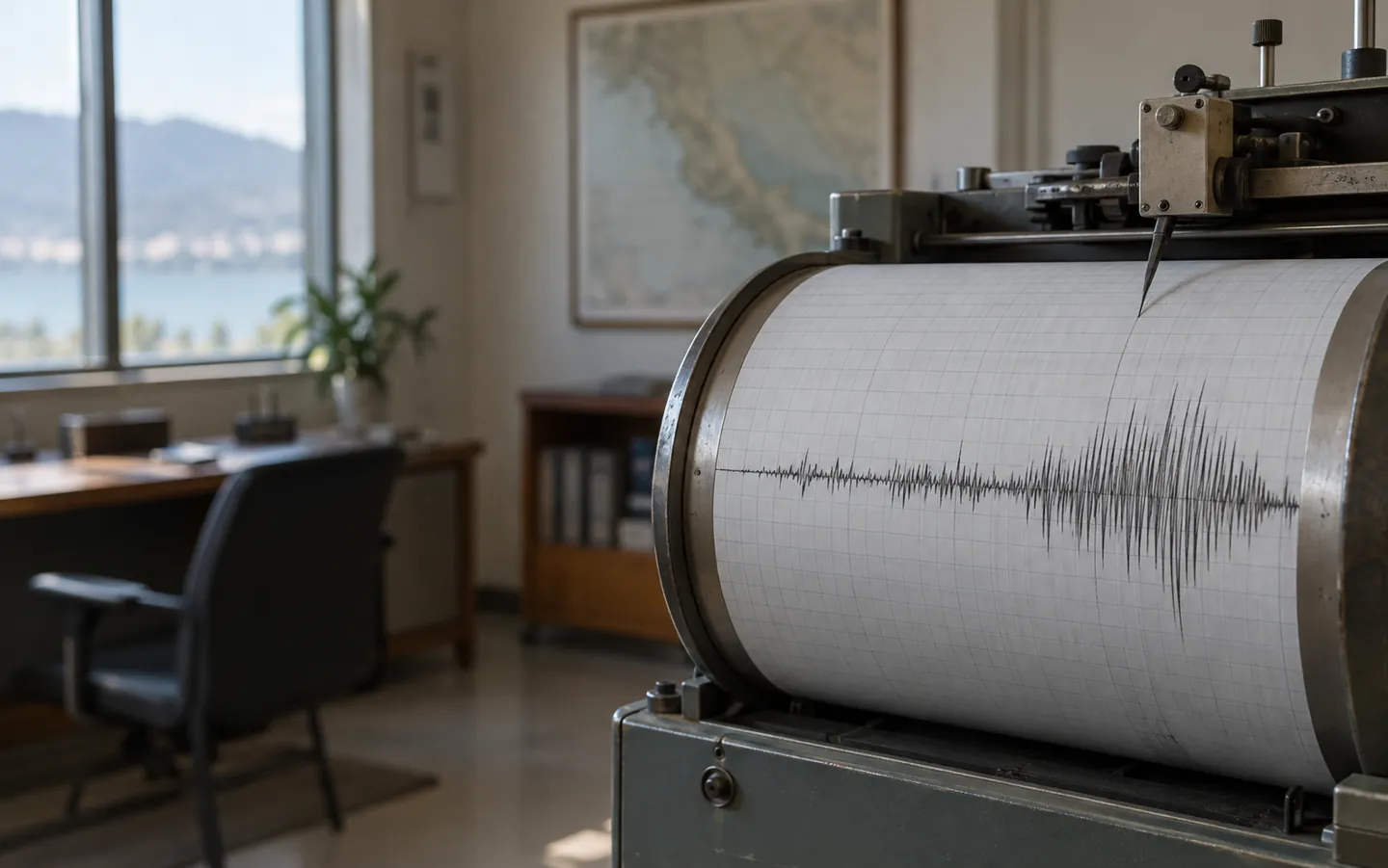
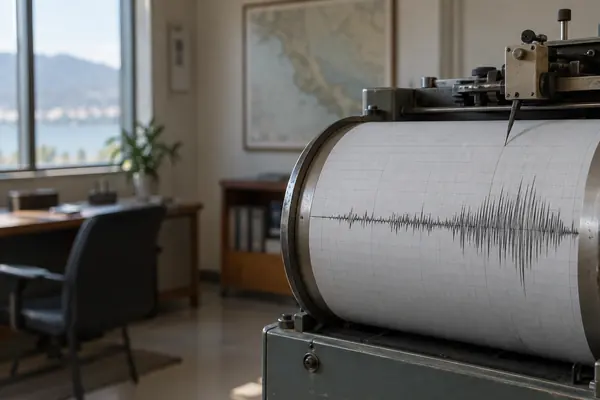
The British Geological Survey detects and locates 200 to 300 earthquakes in the UK every year. Britain is far from a plate boundary, but stresses in the crust are released along old faults, and now and then one is big enough to crack plaster and topple chimneys.
200–300UK quakes a year
How often?Keep in mind
THE SHORT ANSWER
Hundreds detected,
a handful noticed.
HOW OFTEN
BGS figures for mainland Britain suggest around 140 quakes a year of magnitude 1 to 1.9, but a magnitude 5 or larger only about every 8 years.
Compare sizesDAMAGE
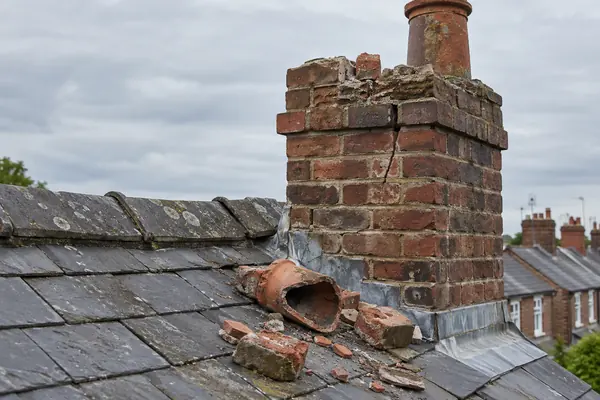
The UK's biggest quakes crack plaster and topple chimneys. The 1884 Colchester earthquake, magnitude 4.6, was the most damaging for several centuries.
Read the historyWHERE
UK quakes are neither random nor even: more frequent and larger events happen in the west, including North Wales, the Welsh borders and western Scotland.
Read a quake reportHOW OFTEN?
Pick a magnitude. The value is the average rate for mainland Britain, based on BGS observations from 1979 to 1994. The bar shows how often it happens.
Averages from one period of records; the real pattern varies year to year. North Sea earthquakes are counted separately.
TWO NUMBERS WORTH KNOWING
One figure for the record,
one for the scale.
6.1 ML
Magnitude of the 1931 North Sea earthquake
Centred offshore near Dogger Bank, about 120 km north-east of Great Yarmouth. It was felt across most of Britain, and damage was reported from 71 places.
LARGEST KNOWN · BGS
30× more
Energy step from magnitude 5 to 6
Magnitude scales are logarithmic. BGS says a magnitude 5 is equivalent to 1,000 tons of TNT, and a magnitude 6 to 30,000 tons.
MAGNITUDE SCALE · BGS
BGS uses the Richter local magnitude (ML) for UK earthquakes, recorded by its network of 80 monitoring stations across the UK.
READING AN EARTHQUAKE REPORT
UK earthquake reports use a few technical terms. These definitions come from the British Geological Survey.

Step 1
The size of the earthquake itself, worked out from the seismogram with a correction for distance. Each whole step is a big jump in energy.
Step 2
How strongly shaking was felt in a place, on the 12-grade European Macroseismic Scale (EMS). Colchester in 1884 reached 8 EMS.
Step 3
The focus is where the rock first breaks, often kilometres down. The epicentre is the point on the surface directly above it.
Step 4
Smaller quakes that follow at or near the same focus, becoming less frequent with time. Lleyn in 1984 had many; Bishop's Castle in 1990 had only six.
FROM THE RECORDS
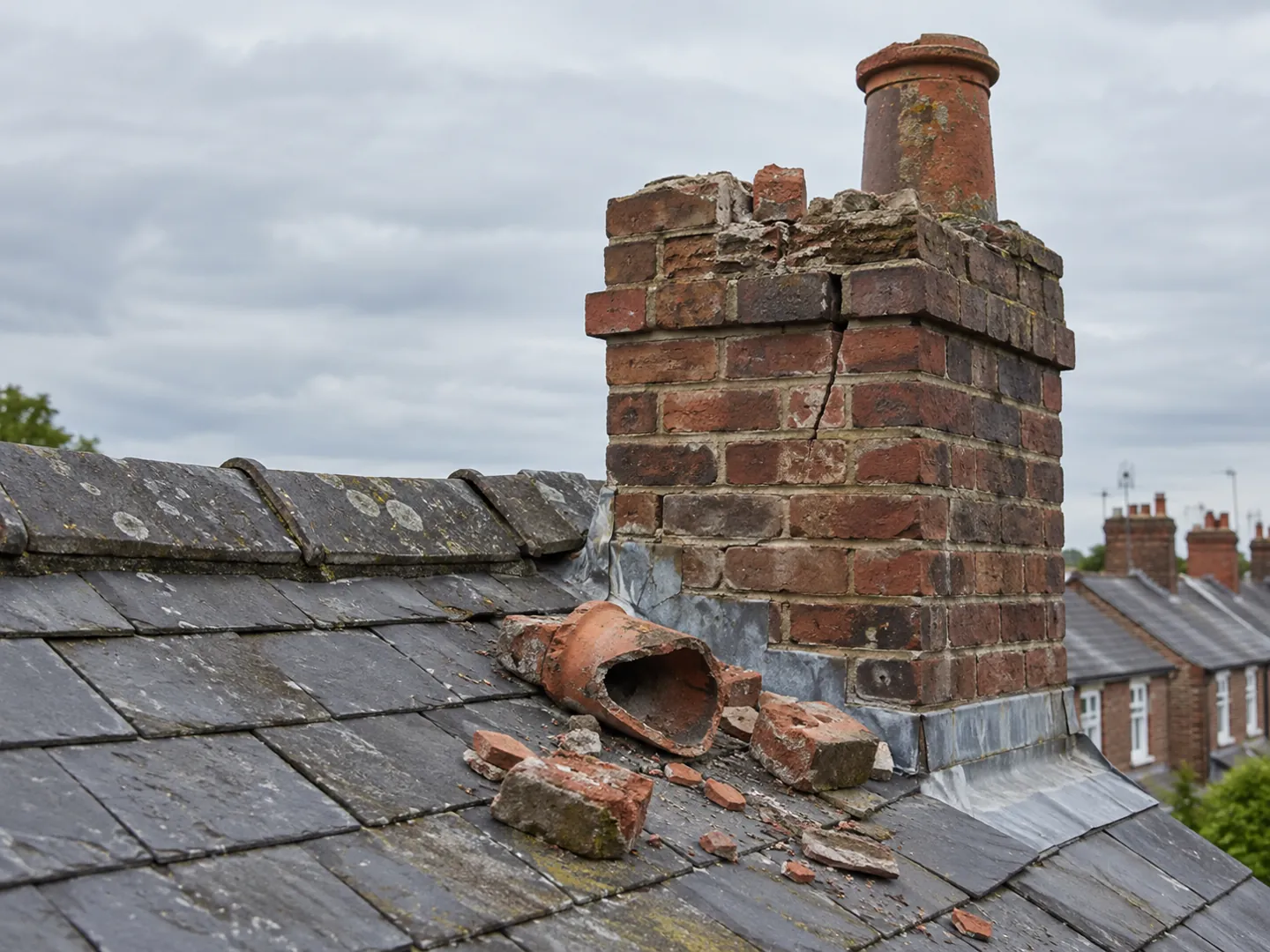
BGS lists eleven people known to have died as a result of UK earthquakes, the earliest two in London from falling masonry in the Dover Straits earthquake of 1580. Most damage has been to chimneys, plaster and church spires.
Earthquakes cannot be predicted: BGS says all attempts so far are generally considered failures. Its sensors are so sensitive they even pick up crowds: jumping fans at a 2009 Edinburgh stadium concert generated signals consistent with a peak crowd energy of 215 kW.
Questions
Between 200 and 300 are detected and located by the British Geological Survey each year, and most are too small to be felt. Larger ones are much rarer: BGS averages for mainland Britain, from records for 1979 to 1994, are about three a year of magnitude 3 to 3.9, one of magnitude 4 to 4.9 every two years and one of magnitude 5 or more about every eight years.
BGS recorded 309 UK earthquakes in 2025 up to mid-December, an above-average year with an earthquake almost every day. The two largest onshore, magnitudes 3.7 and 3.6, struck hours apart near Loch Lyon in Perth and Kinross on 20 October, and the public sent BGS 1,320 felt reports during the year.
The North Sea earthquake of 7 June 1931, magnitude 6.1, centred near Dogger Bank. On land, the 1984 Lleyn earthquake in North Wales, magnitude 5.4, was the largest onshore event of the twentieth century.
Stresses still build up within the tectonic plate, and they are relieved by movement on pre-existing faults in the crust.
Magnitude measures the size of the earthquake itself. Intensity, on the European Macroseismic Scale, describes how strongly shaking was felt and what it did in a particular place.
No. BGS says there is no reliable way to predict the time, place and size of an earthquake, so effort goes into understanding hazard and reducing risk.
Destination
Updated
ABOUT THIS NAME
doodlevibe.com is part of the DoodleSale portfolio. It isn't in an auction right now, but you can ask about leasing it.